
What buyers and sellers need to know as housing market conditions change

As the housing market shifts, it’s important to remember that the buying season now stretches well past Labor Day. In my 17 years serving clients across Rosenberg, Richmond, Sugar Land, and beyond, I’ve seen how personal milestones and community changes can influence when buyers and sellers make their moves. For buyers, nothing replaces the insight you gain from walking through a property in person—especially now that AI-edited photos can sometimes make a home look different online. Sellers, with more homes on the market, adjusting your pricing strategy can make all the difference. Having an experienced local agent on your side ensures you stay ahead of the curve and make confident decisions, whether you’re buying, selling, or investing.
New-Construction Buyers Prioritize Space, Financial Confidence and Function, Homes.com Survey Finds

When it comes to new construction homes, today’s buyers are truly focused on what matters most: space, function, and peace of mind. I’m seeing firsthand how important it is for clients to have private yards, flexible layouts, dedicated home offices, and robust security features. Financial confidence is just as vital—buyers are weighing their options, expecting quality from builders, and looking for homes they can truly trust. Many now expect to personalize their space and are turning to AI and video tools to help them find the right fit. After 17 years helping clients navigate new builds and custom homes across Rosenberg, Richmond, Sugar Land, and beyond, I know just how essential it is to combine practical needs with smart, confident decisions. If you’re exploring new construction, these trends are shaping what’s possible—and how we find your next home.
This Detached at 51 39 Cottage Creek Rosenberg has just been sold
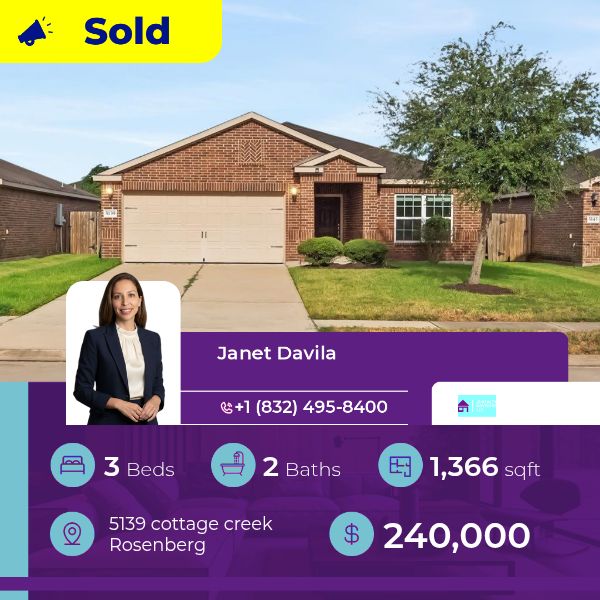
This well-maintained property is perfect for those seeking modern comfort and convenience. With only one owner, the home is in pristine condition and features a covered porch and spacious backyard, ideal for hosting barbecues. Located near trails, gyms, department stores, restaurants, Meyer elementary school is connected to subdivision, and Seabourne Nature Park, this residence offers a variety of recreational and retail options just minutes away. Don't miss the opportunity to make this your new home sweet home.
Behind on your mortgage in Sugarland, Rosenberg, Richmond, Katy or Houston? Here are your options


“what happens if I miss a mortgage payment”
“how many mortgage payments can you miss before foreclosure”
“mortgage grace period”
“can’t afford my mortgage”
“mortgage forbearance options”
Stage 2: Already behind
“behind on mortgage what to do”
“loan modification vs forbearance”
“how to catch up on missed mortgage payments”
“does missing a mortgage payment hurt credit”
“mortgage servicer won’t work with me”
“mortgage hardship letter example”
Stage 3: Notice received, foreclosure looming
“notice of default Texas” / “notice of trustee sale”
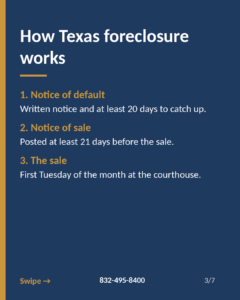
“how long does foreclosure take in Texas”
“how to stop foreclosure”
“Texas foreclosure process first Tuesday”
“can I sell my house if I’m in foreclosure”
“foreclosure vs short sale”
“how to avoid foreclosure”
Stage 4: Looking at exits
“what is a short sale”
“short sale vs foreclosure credit score”
“deed in lieu of foreclosure”
“sell house underwater on mortgage”
“do I owe the difference after a short sale” (deficiency)
“how to sell a house fast with a mortgage behind”
“I’m three months behind on my mortgage in Texas, what are my options?” or “Should I sell my house or try a loan modification?” People also ask for help drafting a hardship letter or what to say to their servicer. If you want to be the source an AI or search engine pulls from, publish clear, plain-language answers to these exact questions.
These are all questions that my clients asked me or googled before they set up a consultation with me. What can I help home owners with? I can help them evaluate their home and determine if a short sale, traditional sale or loan modification is right for you. Reach out to me.
832-495-8400
janet@jdrealtyadvisors.com
I found a charming house that’s a real bargain but you’ll need patience because closing won’t be quick and the lender must give the green light before anything officially finalizes
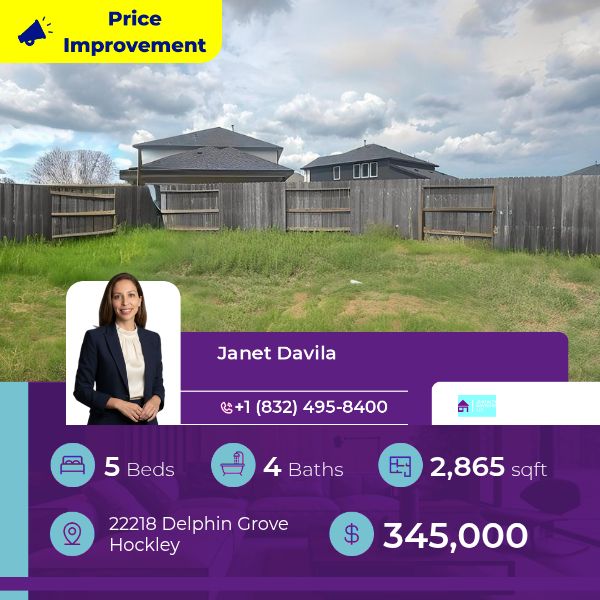
This home is a good value. Buyer will need extra patience (not a fast closing). This type of sale requires lien holder approval before closing.
Price Reductions Hit 20.4% of Active Listings

Across the country, we’re seeing a shift: 20.4% of active home listings have experienced price reductions lately. After eight months of steady contract growth, homes going under contract dipped by less than 1% in Mid-Q3, as higher borrowing costs began to impact buyer demand. The average 30-year fixed mortgage rate peaked near 6.7% early in Mid-Q3, remained elevated for several weeks, and ended the period over 20 basis points above where it started in Early-Q3. Despite this softer demand, the market kept moving—national median list price declined to $424,500, active listings climbed around 4%, and new listings edged down slightly. Fewer sellers decided to withdraw, with delistings down about 13%. Slower activity has given buyers a bit more time and leverage, but smart pricing is still helping sellers close deals. As we look ahead, the steadiness of mortgage rates may prove just as important as how high or low they go. If rates hover around 6.7%, we could see more sellers making price adjustments or stepping back from the market. Having guided buyers and sellers through changing markets across Rosenberg, Sugar Land, and beyond for over 17 years, I know how critical it is to adapt strategies when the landscape shifts.
Texas New Homes Are Selling Faster

Texas new homes are moving off the market more quickly, even as overall sales have softened. In mid-Q3, 5,700 new homes sold across the state—a dip of about 7% from the previous month and 3% from last year. What stands out is that the average Days on Market dropped to 109 from 112 at the start of the quarter, marking the fourth consecutive month of improvement. Still, compared to last year, it’s taking a bit longer for homes to sell. The average new home price in Texas held steady around $424,000, and sales-to-list price ratios improved to roughly 98%, highlighting firm pricing despite shifting demand. As expected for this time of year, demand cooled and pending sales dropped, making inventory management and pricing strategy even more critical for both buyers and sellers. Active listings climbed to 37,000 statewide in mid-Q3, giving buyers more options than we've seen in previous quarters. With over 17 years of experience guiding clients through every market turn, I continue to monitor these trends closely to provide strategic advice for your next move in Houston, the Dallas Metroplex, and beyond.
Seller Concessions Reach a New US Peak

Lately, we’ve seen seller concessions reach a new high across the US—about 45% of home sales in the rolling 3-month period ending Mid-Q3 included some form of concession. That’s the highest share for this time of year since at least 2020, and it’s up from roughly 43% a year ago. What does this mean for buyers? Elevated inventory and lighter competition are giving homebuyers more options at the negotiation table. Concessions can cover repairs, closing costs, or even mortgage-rate buydowns—so buyers can lower their upfront costs in ways beyond a simple price cut. More sellers are now competing by offering closing-cost credits and rate buydowns, not just adjusting prices, which is leading to more flexible deals overall. Nationally, about 16% of homes sold in Mid-Q3 combined a price reduction with a concession, making homeownership more accessible for many. After more than 17 years of helping clients in Rosenberg, Richmond, Sugar Land, and throughout the Houston and Dallas Metroplex, I’ve found that understanding these shifts can make all the difference in a successful transaction for both buyers and sellers.
This home is a good value. Buyer will need extra patience (not a fast closing). This type of sale requires lien holder approval before closing.
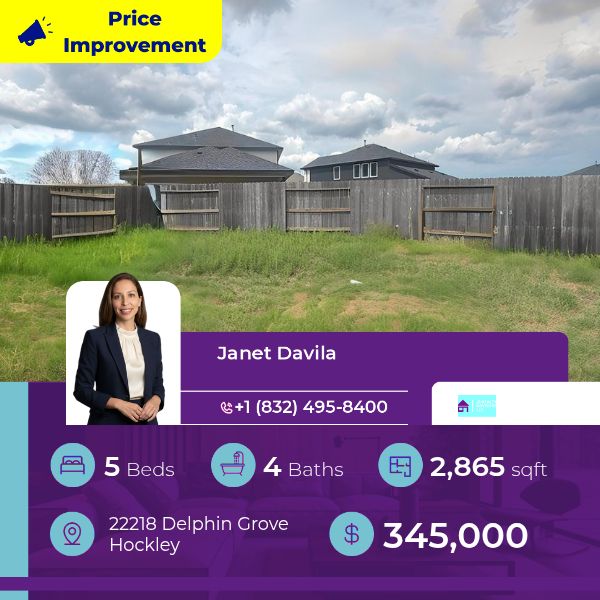
This home is a good value. Buyer will need extra patience (not a fast closing). This type of sale requires lien holder approval before closing.
Maximizing Record Home Equity for Greater Purchasing Power

It's easy to look at today’s high home prices and believe your equity has never been stronger. But when we adjust for inflation, the picture changes: since fall 2025, home values in Texas have actually dropped about 4% in real terms, while nationally the decline is about 2%. What does this mean for homeowners? Even with record nominal prices, the true purchasing power of your home equity hasn’t surpassed what it was in 2019. Over my 17 years as a broker serving Rosenberg, Richmond, Sugar Land, and beyond, I’ve seen how understanding the difference between nominal and real value can make all the difference for buyers and sellers alike. It’s just one of the ways my team and I help clients make informed decisions in changing markets across Houston and the Dallas Metroplex.